
DeWalt Residence
Luxury by the Sea: Historic New Bedford, Massachusetts whaling industry warehouse re-envisioned as residence
Click an image to enlarge
Located at 90 Front Street in New Bedford, Massachusetts, the Joseph Tabor building has stood solidly by the waterfront since its original construction in 1836. At the time, the whaling industry was surging in New Bedford, and the Tabor brothers sought to capitalize on the resulting opportunities by producing blocks, pumps and other items for local seamen. Because the Tabor building was designed to be a warehouse to produce, house and maneuver large nautical equipment, the interior is spacious and skewered with an enormous steel rod that supports the floors from basement to roof. Although the Tabor brothers were successful for many years, their business folded at the turn of the century when new technologies made their shop and its offerings obsolete. The Tabor building changed hands many times, suffering everything from dubious restructuring projects to a fire. While historic downtown New Bedford appreciated, the Tabor warehouse languished.

Recently, local businessman Peter DeWalt saw potential in the aging warehouse. He thought it might make a unique residence, so he purchased the building in 2003 and began planning its renovation. "I wanted very much to live in New Bedford," he said, adding that he looked at a number of other buildings but was most impressed by the Tabor building’s facade, as well as its proximity to the waterfront and downtown. "I really liked the openness of the building. I wanted to renovate it while staying true to its character and history."

Because the Tabor building resides in a national historic location, its renovation required local approvals for all proposed changes. Peter DeWalt hired architect Dan Gifford to redesign the interior without taking any drastic measures - the overall structure of the building was to remain consistent. He was determined to keep all of the original wood in the building, and found additional matching beams by scouring lumber and salvage yards. The beams were sandblasted with soft cornhusk to appear authentic and not overly finished. Many original pieces of wood were repurposed entirely as part of the interior design of the finished space: a hulking door became a coffee table, and a large block and pulley frame now surrounds the television and entertainment area of the living room. "We wanted to keep the nautical theme going," said DeWalt. "It was important that every piece of the interior suited the building's original architecture."

Lighting the interior of the space presented a unique challenge. Gifford noticed that the building originally didn't get a great deal of natural light, and much of the light that was available was absorbed by all the dark wood and stone in the architecture. "We were concerned that, no matter how much light we added to the space, it would still be dark," said DeWalt. To address this, skylights were added to the southwest side of the roof, bringing plentiful daylight into the uppermost loft section of the building. Since adding the skylights required visible alterations to a historic downtown building, The New Bedford Historical Society had to be petitioned and give its approval before any exterior changes could be made.
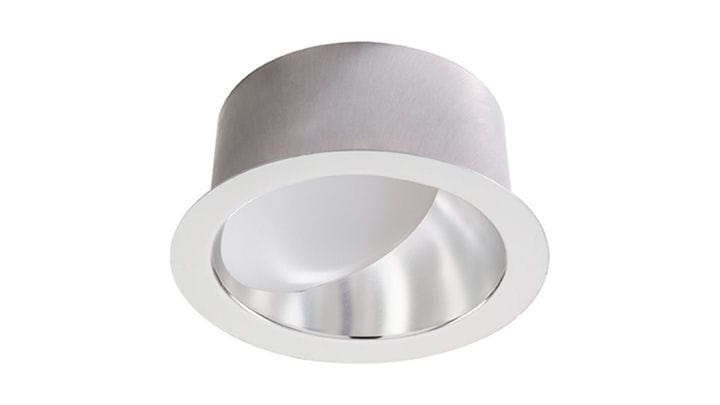
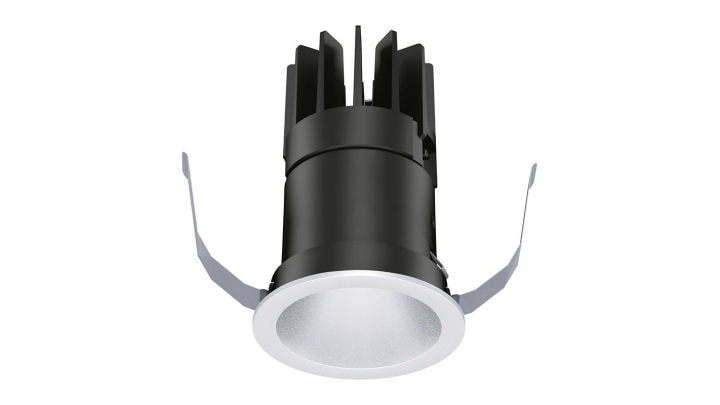
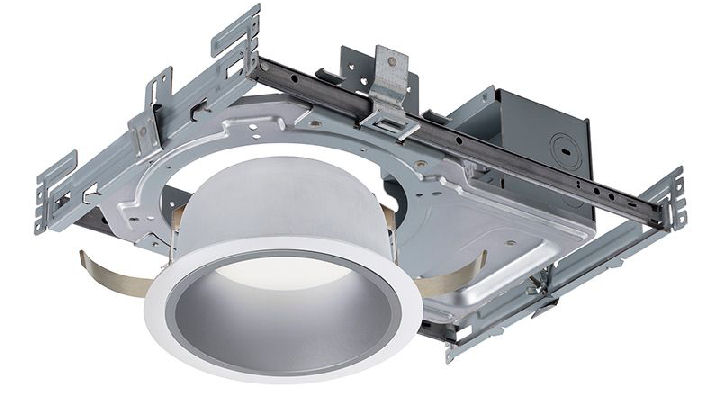
As for electrical lighting, "The Tabor building was very restricted in terms of wiring," said Evelyn Audet, the lighting designer hired to address these challenges. "There were no walls to chase and no plenum to install recessed lighting in the third floor ceiling. The usual options for residential lighting had to be ruled out." Instead, she found a way to integrate Lightolier track heads between the ceiling beams, which effectively camouflaged them from view. "We were able to tuck the track and track heads up between the beams." Recessed lighting was limited to the top floor of the building where a ceiling was installed, accommodating insulatable low-voltage housings and adjustable slot trims that lie flush with the surface, creating perimeter lighting.

90 percent of the lighting fixtures used in Peter DeWalt's new residence were manufactured by Lightolier. Geostar track heads were used throughout the residence, mounted between ceiling beams along varying lengths of track, and Lytecaster recessed downlights were used on the top floor where finished ceiling was available to accommodate them. "Scale was one of our biggest concerns," said Evelyn Audet. "We needed fixtures that were small enough to be unobtrusive, but that had strong luminance to keep the interior from looking dim. Lightolier presented the best options for this kind of project."


Now that the main renovation is completed, Peter DeWalt lives on the third floor and loft section of the building, while the second floor is a separate condo and the basement and ground floor is being developed into a high-end restaurant and wine bar scheduled to open in late fall 2006. "I really enjoyed the process," said DeWalt. "It's amazing that the entire project only took a year and a half." As a result of DeWalt and Gifford's shared concern for authenticity, the residence received the Sarah R. Delano preservation award, issued by the Waterfront Historic Area League (W.H.A.L.E). "I love that we were able to give the building a new life while staying so true to the original," said DeWalt.
About Lightolier
Headquartered in Fall River, Massachusetts, Lightolier, for over 100 years, has provided creative lighting solutions for commercial, institutional, and residential lighting needs. Lightolier is on the World Wide Web at www.lightolier.com. Lightolier is a Royal Philips Electronics (NYSE:PHG, AEX:PHI) Company. Philips is a global leader in healthcare, lighting and consumer lifestyle, delivering products, services and solutions through the brand promise of "sense and simplicity." Headquartered in the Netherlands, Philips employs approximately 128,100 employees in more than 60 countries worldwide. Philips is a market leader in medical diagnostic imaging and patient monitoring systems, energy efficient lighting solutions, personal care and home appliances, as well as consumer electronics.

Distributor
& Sales Log-In
  •  
631 Airport Road, Fall River, MA 02720 • Tel (508) 679-8131 • Fax (508) 674-4710
©2004-2012 Koninklijke Philips Electronics N.V. All rights reserved.